Reviewing Welcome to Our Hive for Real Projects
As a designer who has spent years digitizing and testing machine embroidery design files, I have learned that the difference between a good pattern and a great product often comes down to context. When I first loaded the Welcome to Our Hive file into my software, I was not just looking at shapes and stitches; I was visualizing the final finished product in a customer’s home. This is not merely a decorative element; it is a statement piece for the House category that requires careful consideration of fabric, thread, and placement.
First Impressions and Visual Personality
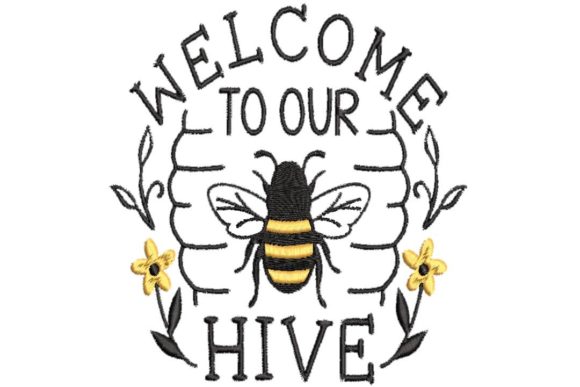
The immediate mood created by this design is one of warmth and community. The phrase "Welcome to Our Hive" suggests a cozy, inviting atmosphere, making it an ideal candidate for entryway decor or personalized gifts. Visually, the layout balances text with thematic imagery, likely involving hexagonal motifs or bee-inspired elements that reinforce the "hive" concept. For an Etsy seller or craft business owner, this visual personality is crucial because it communicates a specific lifestyle value—belonging and hospitality.
From a technical standpoint, the design appears to rely on a mix of satin stitch for borders or lettering and fill stitch for larger graphical elements. This combination is standard for creating depth, but it demands respect during the stitching process. The detail level seems moderate, which is a positive sign for versatility. It is detailed enough to look professional on a tote bag design but not so dense that it becomes stiff or unmanageable on softer fabrics.
Real-World Application: The Custom Tote Bag Scenario
To truly evaluate this embroidery file, I imagined a specific real-life scenario: creating a custom canvas tote bag for a local farmer’s market vendor. The client wanted something durable yet charming. I selected a heavy-weight cotton canvas, which is forgiving for machine embroidery due to its stability. Hooping the fabric with a cut-away stabilizer ensured that the weight of the stitches would not distort the bag over time.
When stitched out, the design held its shape well. The thread colors I chose were warm golds and soft yellows, contrasting nicely against the natural beige canvas. The result was not just a bag; it was a handmade product that felt premium. Customers are drawn to items that tell a story, and this design immediately sparks conversation. It transforms a simple utility item into a personalized gift or a boutique branding asset.
Versatility Across Product Lines
Beyond tote bags, this design shows promise in several other areas. For sweatshirt embroidery, the design would need to be scaled appropriately to avoid overwhelming the chest area. On a pillow cover, it serves as a focal point for living room decor. Even as an embroidered patch, it could be applied to denim jackets or backpacks, appealing to a younger demographic interested in cottage-core aesthetics. The key is understanding how the fabric texture interacts with the stitch density.
For holiday embroidery projects, such as housewarming gifts or Thanksgiving decor, this theme fits perfectly. It is not seasonal in a restrictive way, meaning it can be sold year-round, which is vital for maintaining consistent revenue in a small shop product lineup. Whether used for custom apparel or home accents, the design maintains its integrity as long as the hooping and stabilization are correct.
Technical Considerations and Potential Pitfalls
While the design is robust, there are areas where caution is necessary. If you plan to use this on stretchy fabric like jersey knits for baby embroidery items, you must use a high-quality stabilizer and possibly a backing that prevents puckering. The stitch density in the filled areas might be too heavy for very thin materials, leading to perforation or distortion. Always test on scrap fabric first.
Another critical factor is the size of the hoop. If the design includes fine details or small lettering, ensure your machine can handle the resolution at the desired scale. Stitching on curved surfaces, such as caps, requires additional expertise and possibly a different digitizing approach if the original file was intended for flat hoops. Dark fabrics present another challenge; light-colored threads may require a underlay or a base layer to prevent the fabric color from showing through and muddying the design.
Enhancing Visual Appeal and Brand Consistency
For digital embroidery file sellers or those creating printable mockup assets, the clarity of this design is a selling point. Clean lines and well-defined edges make for attractive photos on social media and online listings. When customers see a crisp, professional stitch-out, their trust in your brand increases. This design supports brand consistency if your shop focuses on nature-inspired or home-centric themes.
However, visual appeal is also about contrast. I recommend testing the design in black and white mockups to ensure the shapes are distinguishable even without color. This helps in selecting thread colors that provide sufficient contrast against various background fabrics. A lack of contrast can make even the best applique design look flat and uninteresting.
Practical Notes for Designers and Makers
Before committing to a large production run or listing this as a commercial embroidery product, take these practical steps:
- Test on Scrap Fabric: Always run a test stitch on the exact fabric type you intend to use. This reveals issues with tension, density, or registration.
- Check Stabilizer Compatibility: Match the stabilizer to the fabric weight. Heavy fabrics may need less support, while light or stretchy fabrics require robust stabilization.
- Verify Licensing: Confirm whether the embroidery project license allows for commercial use. If you are an Etsy seller, ensuring you have the right to sell finished items made from this design is non-negotiable.
- Inspect Small Details: Zoom in on the digital preview to check for tiny jumps or potential thread breaks in intricate areas.
- Consider Washability: If the item is a kitchen towel or apron, ensure the threads used are colorfast and the stitches are secure enough for frequent washing.
In conclusion, Welcome to Our Hive is a versatile and emotionally resonant design that performs well when treated with professional care. It bridges the gap between decorative Embroidery art and functional home goods. By paying attention to fabric choice, stabilization, and thread selection, you can elevate this design from a simple pattern to a standout product that delights customers and enhances your portfolio. Whether for a personalized gift or a small business merchandise line, this design offers a solid foundation for creative expression.