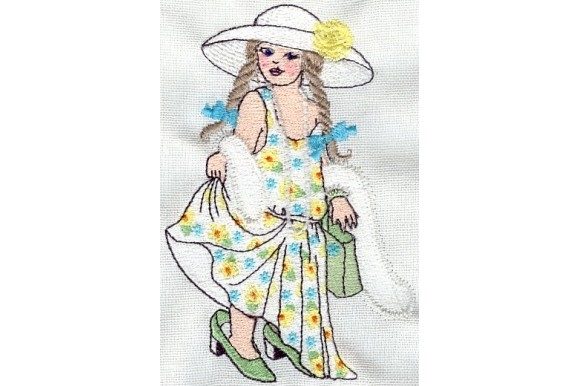
Dressup Girl Embroidery Design Review for Merch
As an embroidery designer who has spent years digitizing files and consulting with small business owners, I approach every new machine embroidery design with a critical eye. It is not just about whether a motif looks cute on a screen; it is about how that design performs when stitched out on real fabric, how it holds up in the wash, and most importantly, how it serves the brand identity of the client using it. Today, I am reviewing Dressup Girl, a digital embroidery file that promises to bring a sense of childhood whimsy to various textile applications.
The product description highlights a charming concept: "Every little girl dreams of dressing up like an adult." This narrative immediately sets the tone. While the product category is listed under Boys and the type is standard Embroidery, the visual personality of Dressup Girl leans heavily into playful, feminine, and nostalgic aesthetics. For a small business owner, understanding this disconnect between categorization and actual visual appeal is crucial for marketing. You are not selling a rugged utility item; you are selling a moment of imagination.
First Impressions and Visual Personality
When I first loaded the preview of Dressup Girl, the immediate impression was one of friendly accessibility. It does not scream high-fashion luxury or stark modern minimalism. Instead, it feels handmade, decorative, and approachable. For boutique owners, Etsy sellers, and creators of handmade products, this is a significant asset. The design suggests warmth and care, which translates directly into perceived value for the customer. It is the kind of imagery that works exceptionally well for brands targeting parents, grandparents, and gift-givers who want to evoke nostalgia.
However, from a technical standpoint, "adorable" can sometimes mean "complex." Designs that rely on cuteness often utilize fine details, small facial features, or intricate clothing patterns. As a designer, my first concern is always stitch density and spacing. If the design is too dense, it will pucker lightweight fabrics like t-shirts or scarves. If the details are too small, they may merge together during stitching, losing the charm that makes the design appealing in the first place.
Real-World Business Applications
Let us move beyond theory and look at how Dressup Girl performs in actual commercial embroidery scenarios. The description suggests use on pajamas, sweatshirts, t-shirts, and scarves. These are excellent starting points, but for a small business looking to maximize return on investment, we need to think broader.
- Embroidered Patches: This is perhaps the strongest application for this design. By stitching Dressup Girl onto twill or felt and cutting it out, you create a versatile asset. Patches can be applied to denim jackets, canvas tote bags, or even backpacks. This allows customers to customize their own items later, adding value to your finished product.
- Custom Apparel for Kids: Beyond the suggested pajamas, consider birthday shirts or matching family outfits. The theme of "dressing up" aligns perfectly with milestone celebrations. Ensure you use a soft stabilizer to keep the garment comfortable against sensitive skin.
- Tote Bag Design: A canvas tote featuring this character can serve as a charming gift-with-purchase for boutiques, florists, or bakeries. It reinforces brand identity by associating the business with warmth and thoughtfulness.
- Apron Embroidery: For businesses selling baking kits or craft supplies, an apron with this design adds a layer of professional yet playful branding. It suggests that the work done while wearing it is creative and fun.
Technical Considerations and Limitations
While the aesthetic is strong, there are areas where Dressup Girl requires careful handling. Not every surface is suitable for every design. Here is where experience matters.
Cap Embroidery is tricky. The curved surface of a cap front distorts designs. If Dressup Girl has wide horizontal elements, they may appear warped when stitched on a structured cap. I recommend testing a mockup specifically for headwear before offering it as a standard option. Additionally, check the hoop size requirements. If the design is large, it may not fit standard cap frames without resizing, which could compromise the stitch quality.
Fabric Texture also plays a massive role. The description mentions scarves. If these are thin, slippery silks or loosely knitted wools, the design may pull or distort. Always test on the exact fabric weight you intend to sell. For dark uniforms or black t-shirts, ensure the thread colors have enough contrast. A pastel-heavy design might vanish on navy blue unless you use underlay stitches effectively or choose brighter thread shades.
Another critical factor is stitch density. High-density designs are durable but stiff. For a child’s pajama, stiffness is unacceptable. You must verify if the file allows for density adjustments or if it is optimized for light fabrics. If the design is intended for heavy-duty use, such as on a work shirt, it might lack the boldness required for visibility at a distance.
Impact on Brand Identity and Trust
Using a consistent visual asset like Dressup Girl helps build brand recognition. When customers see this specific character on your tags, packaging, or merchandise, they begin to associate it with your quality. It creates a cohesive look across your design assets. However, professionalism is key. A poorly stitched version of a cute design looks worse than no design at all. It can signal low quality and hurt customer trust.
To maintain professionalism, ensure your finished product is clean. Trim jump threads, use appropriate backing, and press the item properly. The difference between a hobbyist item and a premium small business merch piece is often in these finishing touches. A well-executed embroidered patch or chest logo accent elevates the perceived value of the base garment significantly.
Practical Designer Notes for Production
Before you commit to a large production run or list this item in your shop, follow these steps:
- Test in Black and White: Stitch the design out using only black thread on white fabric. This reveals the structural integrity of the digitizing. If it looks good in monochrome, it will look great in color.
- Check Small Sizes: Resize the design to the smallest dimension you plan to offer, such as a pocket logo. Ensure details do not merge. If they do, you may need to simplify the design or limit the minimum size offered.
- Review Thread Color Contrast: Plan your palette carefully. Use a color chart to match threads to your brand guidelines. Do not rely solely on screen colors.
- Confirm Hoop Size and Stabilizer: Match the hoop to the design dimensions. Use cut-away stabilizer for stretchy fabrics like t-shirts and tear-away for stable woven fabrics like aprons.
- Create a Printable Mockup: Before stitching, use software to visualize the design on different garments. This helps in marketing and client approval.
- Verify Commercial Licensing: The description mentions it is a machine embroidery design, but always confirm the license terms. Ensure you have the right to use it for commercial embroidery and selling physical goods. Never assume; always read the license included with the digital embroidery file.
In conclusion, Dressup Girl is a viable asset for small businesses targeting a youthful, nostalgic, or gift-oriented market. Its strength lies in its emotional appeal and versatility across patches and apparel. However, its success depends entirely on technical execution. By respecting the limitations of fabric, hoop size, and stitch density, you can transform this simple design into a powerful tool for brand building and revenue generation. Treat it with the precision it deserves, and it will serve your business well.