Alabama State: A Designer’s Review for Branded Merch
As an embroidery designer who has spent years digitizing artwork and consulting with small business owners, I approach every new machine embroidery design with a critical eye. It is not enough for a file to look pretty on a screen; it must perform under the needle, withstand washing, and elevate the brand it represents. Recently, I reviewed Alabama State, a digital artwork map of Alabama positioned as a wonderful option for 4th of July USA Independence Day celebrations. While its thematic roots are patriotic, my focus here is strictly on its utility for small business merchandise, branded patches, and commercial applications.
First Impressions: Visual Personality and Brand Fit
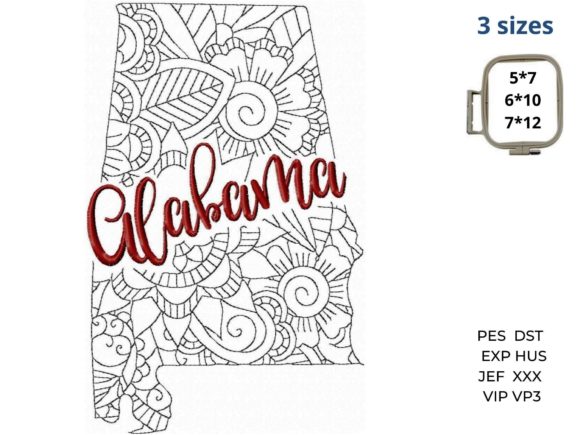
The first thing you notice about Alabama State is its inherent sense of place. It feels grounded, classic, and slightly rustic, which makes it an excellent candidate for brands that want to project authenticity. Unlike ultra-modern, abstract logos, this design leverages the recognizable silhouette of the state, creating an immediate emotional connection with local customers. For a boutique, handmade shop, or creative studio located in the region, this isn’t just decoration; it is a statement of community pride.
The aesthetic leans towards the traditional yet remains clean enough for modern apparel. It does not scream "loud" or "aggressive," but rather offers a friendly, welcoming vibe. This makes it versatile for a wide range of industries, from florists and bakeries to pet brands and local cafés. When evaluating design assets for client projects, I look for versatility, and this piece offers a solid foundation for various branding needs within the North America market.
Real-World Business Applications
Where does Alabama State truly shine? In my experience, state-shaped designs are incredibly powerful for small business merch because they tap into regional loyalty. Here is how I would deploy this design in a commercial setting:
- Embroidered Patches: This is perhaps the strongest use case. A well-digitized state outline makes for a fantastic iron-on or sew-on patch. You can sell these as standalone products or use them to upgrade plain goods.
- Staff Uniforms and Aprons: For a local café or bakery, stitching this onto the chest of an apron embroidery project adds a touch of local flair without overwhelming the uniform. It signals to customers that the business is homegrown.
- Tote Bag Design: Canvas totes are a staple for craft fairs and Etsy sellers. Placing this design centrally on a tote creates a functional, stylish item that customers will use daily, effectively turning them into walking billboards.
- Cap Embroidery: A smaller version of this design works well on the side panel or back of a baseball cap. It is subtle enough for everyday wear but distinct enough to be recognized.
- Customer Gifts and Event Merch: During the 4th of July or local state holidays, this design becomes a premium add-on. It transforms a standard t-shirt into a commemorative piece.
Technical Considerations for Production
While the concept is strong, the execution depends entirely on the technical quality of the digital embroidery file. As a designer, I always advise checking specific details before committing to a large production run. The product description notes that this artwork is perfect for stitching onto t-shirts, bags, and jackets, but it does not provide exact stitch counts, file formats, or recommended hoop sizes. Therefore, due diligence is required.
Here are the critical technical factors to evaluate:
- Stitch Density and Detail: State maps often contain intricate borders. If the stitch density is too high, the fabric may pucker, especially on lighter materials like t-shirts. Conversely, if it is too low, the shape may lose definition. Always run a test stitch on a scrap piece of your intended fabric.
- Size Scalability: Can this design be resized without losing integrity? For a small chest logo, the outline must remain clear. For a large back print, the internal details (if any) must not become sparse. Check if the design holds up at both extremes.
- Thread Colors: Since this is tied to Independence Day, you might be tempted to use red, white, and blue. However, consider your brand palette. Does it work in monochrome? Test it in black and white first to ensure the shape is recognizable without color reliance.
- Stabilizer Selection: The choice of stabilizer is crucial. For stretchy fabrics like jersey tees, a cut-away stabilizer is often necessary to prevent distortion. For woven bags or jackets, a tear-away might suffice. Match the stabilizer to the fabric texture.
Strategic Placement and Caution Areas
Not every surface is suitable for every design. While Alabama State is versatile, there are areas where caution is needed. Avoid placing highly detailed versions of this design on curved surfaces like the front of a structured cap unless the digitization is specifically optimized for that curve. Distortion can occur quickly on rounded forms.
Additionally, be mindful of tiny lettering if the design includes text elements such as "Alabama" or dates. Small text often gets lost in embroidery due to thread thickness. If the design relies on small text for context, consider removing it for smaller applications like sleeve details or pocket logos. Focus on the silhouette, which is the strongest visual element.
Dark uniforms present another challenge. Ensure that the thread colors provide sufficient contrast. A dark blue thread on a black shirt will vanish. Always create a printable mockup or a physical sample to verify visibility before finalizing the finished product.
Enhancing Brand Identity and Customer Trust
Ultimately, the goal of using Alabama State is to strengthen brand identity. When customers see consistent, high-quality embroidery on your custom apparel or packaging, it builds trust. It signals professionalism and attention to detail. A sloppy stitch-out can damage a brand’s reputation, while a crisp, clean design enhances perceived value.
For Etsy sellers and handmade brands, this design can serve as a key differentiator. It moves your product from being a generic commodity to a localized, meaningful item. Buyer engagement often increases when customers feel a personal connection to the product’s origin. By integrating this design into your commercial embroidery lineup, you are not just selling a shirt or a bag; you are selling a piece of local pride.
Final Designer Notes
Before you purchase or license this embroidery file, confirm the commercial licensing terms. Ensure you have the right to use it for physical goods you intend to sell. Compare it beside your other design assets to ensure visual consistency across your brand. If you are new to embroidery, start with a small batch. Test it on different materials—denim, cotton, canvas—to understand how it behaves.
In summary, Alabama State is a promising asset for businesses looking to connect with their local community. With careful attention to technical details like hoop size, stabilizer, and thread choice, it can become a cornerstone of your merchandise strategy. Treat it not just as a graphic, but as a tactile brand element that customers can touch, wear, and cherish.